
None Shall Pass
The Department for Work and Pensions is developing an 'Independent Disability Advisory Panel'

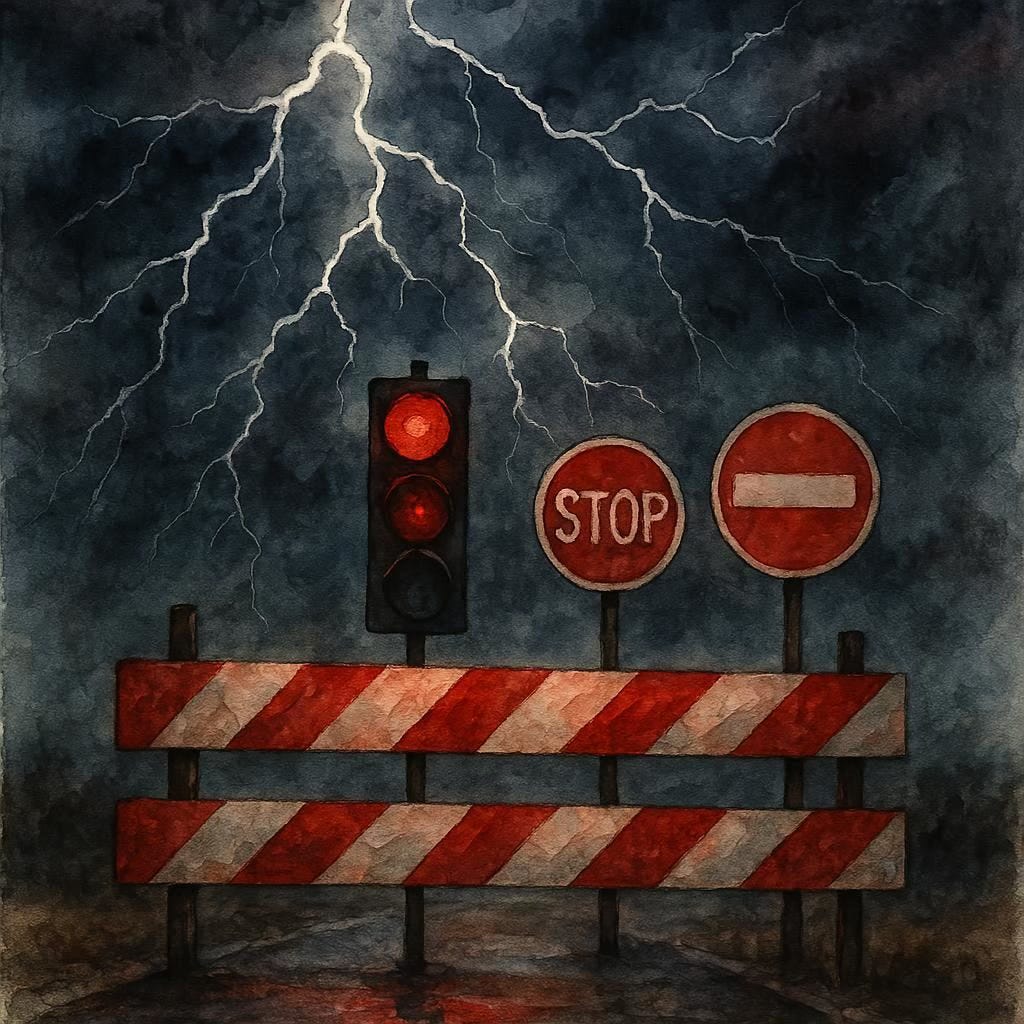
“The Department for Work and Pensions is looking to create a Panel to support, advise and connect the department to the wider disability community.”
In their proposal, their outreach pitch, they say, and I may be paraphrasing here…
‘Blah blah blah, accessibility, blah, equality, blah, diversity, blah, blah, equity, blah blah…collaboration…blah, blah…
‘In order to work with us you must sign a fucking none disclosure agreement’
(I might have added ‘fucking’ for dramatic affect there.)
This comes straight after stating ‘Panel members may also be asked to share questions with their networks and gather wider feedback for the Department.’ A statement that, kind of implies meaningful outreach, inclusivity and community.
Be warned, take heed, this in its current iteration, is nothing like co-production, and it’s about as far away as you can get from co-creation whilst, somewhat cynically some might say, celebrating it under a banner of co-operation, where they claim peoples’ lived and living experiences are of central importance.
They tell us they’re looking for…
“We are looking for people who identify as Deaf, disabled or who are living with a
long-term health condition and who have the following experience:
· Working or volunteering for a Deaf or Disabled People’s Organisation or
· Charity, or active participation in a health or disability related network,
campaign, or research project.
· Existing experience providing strategic advice on matters related to health
and disability.
· Strong understanding of the barriers faced by Deaf and disabled people
and people living with a long-term health condition in relation to
employment, unemployment, and economic inactivity.
· Ability to work effectively with a wide range of people.”
For me, this strongly feels like they, whoever they are, are looking for people just like them.
I don’t know where to start with this. They’re also asking for a CV.
Poverty
This is at a time when at least 30% of people with a disability are in poverty; where 31% of families with a disabled member are in poverty; where 44% of young disabled adults are in poverty
And that’s even before we start to talk about digital poverty.
‘An Ofcom report has revealed that around 4.5 million UK adults still do not access the internet at home’
Around two thirds of disabled adults in the UK report being unable to use key digital platforms or feel overlooked by digital platforms
Add to this, the 250,000 to 400,000 people, including 50,000 children who will be plunged into poverty once the UK’s new disability benefit regulations come into being.
For these hundreds of thousands of people who are being cruelly and arbitrarily ignored by this process, who are tossing up whether they should spend their Dickensian income on either heating or eating, buying a computer with an internet connection that can deal with the foibles of Microsoft Teams is probably the last thing on their minds.
Once again, the very people who are gatekeeping our services are jealously guarding our access to this potentially groundbreaking work.
So, what are we going to do about it?
The demand for a none disclosure agreement is unacceptable. Disabled people are all too accustomed to living in the shadows, masking to get through our lives, primarily because of the constant outpouring of hateful bilge from mainstream and social media that tells us and society at large that we are feckless and lazy parasites.
John Pring reports the shock and anger of disabled activists in the Disability News Service; he tells us,
“Flick Williams, a disability rights campaigner and retired disability equality trainer and access consultant, said NDAs were ‘an instrument that allows those with power to silence those without’”
I think that’s beautifully put.
If you are a disabled person applying to be a part of this, refuse to sign it. How can you even begin to think you’re representative of community when you’re prohibited from speaking with them – and if you do, only in clearly prescribed ways.
How can just 10 people be seen as representative of the 4.4 million folk in receipt of some manner of disability benefit in the UK today?
A cynic might suggest that this is the behaviour of an abuser; that these 10 chosen individuals are being separated from the herd to not only be given ‘preferential’ treatment; experience that may help pave their way in an uncertain and unstructured lived experience career; that this experience is a necessary secret that can’t be shared with their peers, their chosen family; that by being ‘special’ this is a sacrifice they must make.
Where is the trust?
The media tells us that we are untrustworthy. They divide us by saying, ‘It’s not you, it’s the other freeloaders we’re worried about…’ pulling us in with some weird dichotomous rhetoric, where we start to question our own sense of reality.
The blurb goes on to say;
“In its work, the Panel must recognise it does not have the authority to:
commit the government to any actions. This is not a decision-making body
The Department for Work and Pensions will not expect Panel members to endorse government policy publicly”
In other words, in it’s short 6 months of life, this project expects the panel members to dig deep into their own traumatic experience, including many that are repeated because of structural prejudice and discrimination, without at least some guarantee that their words, their effort will somehow make a difference.
What’s the alternative?
I know we’re a disparate bunch; yes, I still see myself as an activist after taking the King’s Shilling, but we are brilliant. There are millions of shining lights out there who could produce an honest and considered alternative to what’s being imposed on us.
We could work together to produce something that’s more meaningful to us. The DWP panel is perpetuated by the doctrine that employment is good, that only work can set you free.
The breathtaking naivety in the belief that we’re not doing something meaningful in our lives as survivors, as what are often referred to as ‘informal carers’, as friends, allies, campaigners and more, is laughable.
Where this lived and living experience panel will be forced to focus on work, we could start with questions that are more simple and yet more wide reaching than this restrictive, potentially performative work could ever be.
I will be applying to be one of the 10 panel members. This will, in all likelihood be performative, since I will make it clear from the beginning that I will refuse to sign a fucking none disclosure agreement; I also believe that placing their narrow definition of ‘employment’ at the centre of human existence is massively flawed.
This raises the eternal question, should we as activists be inside the castle, changing things from within, or should we be outside the fortifications with our pitchforks, torches and trebuchets, hoping to change them from without?
Or, is the castle irrelevant? Do we just walk on by, looking at it for what it is; an oddity, an archaic and outdated structure that has no place in a modern humanist world?
I believe we need to start at the very beginning, with just two questions that are seldom put to us in this maelstrom of inequity;
‘Who are You?’; and,
‘What matters to you?’
I’d love you to join us.
Chris
